Uncategorised
Extension Drain Survey: Avoid a £15,000 Mistake

The Invisible Liability: Why a Extension Built on Unmapped Drains Is a Financial Time Bomb
If you are planning a home extension, your current focus is likely on architects, structural beams, and kitchen islands. You are thinking about what goes above the ground.
But if you aren't obsessing over what lies beneath it, you are risking a catastrophic structural, legal, and financial headache.
In the UK, thousands of homeowners build extensions directly over public sewers or private lateral drains without a prior CCTV drainage survey. They assume their builder "will spot any issues" when digging the footings.
This guide details what happens when you pour concrete over the unknown, featuring real regulatory data, structural impacts, and the long-term consequences on property resale.
The Risk Matrix: Surveyed vs. Blind Builds
To understand the financial exposure of skipping a pre-construction CCTV drain survey, look at how the scenarios diverge during construction and years down the line at the point of resale.
| Project stage | Scenario A: surveyed build | Scenario B: blind build |
|---|---|---|
| Design & planning | Exact pipe depth, material (e.g. pitch fibre, clay), and mapping are known. The architect designs foundations to bridge the pipes safely. | Foundations are designed blindly. Assumptions are made about pipe locations based on visual manholes. |
| Excavation & pour | A Build Over Agreement is secured from the water authority (for example Thames Water). Building Control signs off smoothly. | Heavy machinery operates over fragile pipes. Hidden structural defects or cracks are worsened by the weight of new brickwork. |
| Building Control sign-off | The completion certificate is issued immediately. | Denied. Building Control discovers an unapproved sewer build-over. Work stops and retrospective applications are forced. |
| Resale (5–10 years later) | The legal pack is bulletproof. The buyer’s solicitor passes the title instantly and full market value is achieved. | The transaction halts. The buyer’s surveyor flags untested or unapproved drains. The mortgage lender refuses funds until it is resolved. |
3 Fatal Post-Extension Drainage Traps (And What Happens to the Homeowners)
-
1. the Retrospective Build-Over Denied (the Resale Nightmare)
By law, if you are building within 3 meters of a public sewer or 1 meter of a public lateral drain (the pipe carrying waste away from your boundary), you must secure a formal Build Over Agreement from your regional water company before laying down brickwork.
-
The Reality: Many homeowners rely on "Permitted Development" rights, mistakenly believing this exempts them from drainage regulations. It does not. When these homeowners go to sell their property years later, the buyer's solicitor will issue a TA6 Property Information Form. The seller is legally required to disclose if they built over an asset. If no Build Over Agreement exists, the transaction hits a brick wall.
-
The Outcome: The buyer's mortgage lender will pull or freeze the mortgage offer. The homeowner is forced to apply for a retrospective agreement. If the water company demands a retrospective CCTV survey and finds the extension’s foundations are putting load weight directly onto a clay sewer pipe, they can refuse sign-off. The homeowner faces thousands in legal delays, massive price drops, or, in extreme cases, an injunction to alter the structure.
2. the Crushed Pipe & the Structural Liability Trap
Clay and historical pitch-fibre drainage pipes are highly susceptible to structural failure under heavy loads. During a home extension, driving heavy plant machinery—such as mini-diggers or 8-ton excavators—across a site inflicts severe ground compaction and pressure vectors. Without a pre-construction CCTV survey, there is no verified baseline documenting whether the underlying pipes were structurally sound or already fractured before work commenced.
-
The Insurance Void: If a drainage line collapses beneath a newly laid concrete slab, the homeowner faces an immediate insurance hurdle. When home insurance loss adjusters investigate a claim for a collapsed internal pipe post-construction, they routinely deny coverage if there is no pre-build CCTV footage. Without that evidence, the insurer will classify the issue as a pre-existing defect or a direct result of unproven contractor negligence, leaving the homeowner entirely liable for the costs.
-
The £15,000+ Remediation Cost: Repairing a structural asset under a newly built extension is exceptionally complex. Contractors cannot perform a standard external excavation. Instead, the process requires specialized structural intervention: jackhammering through finished premium flooring, excavating deep into the engineered concrete sub-base, replacing the damaged utility line, re-pouring the structural concrete, and reinstating the architectural finishes. Between specialized labor, structural engineering sign-offs, and material replacement, total remediation costs frequently meet or exceed £15,000—a severe financial liability that a standard pre-build diagnostic survey entirely prevents.
3. the Building Control Refusal
Local Authority Building Control inspectors are tightening enforcement. If a builder pours concrete over an existing inspection chamber (manhole) to make a room larger without properly rerouting the access point outside the extension, it violates Building Regulations (Part H).
-
The Outcome: Building Control will refuse to issue the Final Completion Certificate. Without this piece of paper, the extension is legally considered unregulated. You cannot safely insure the structure, and you cannot sell the home to anyone requiring a mortgage.
-
The Drain 247 Pre-Build Checklist
Before a single shovel touches your garden, protect your equity by ensuring your contractor ticks these precise boxes:
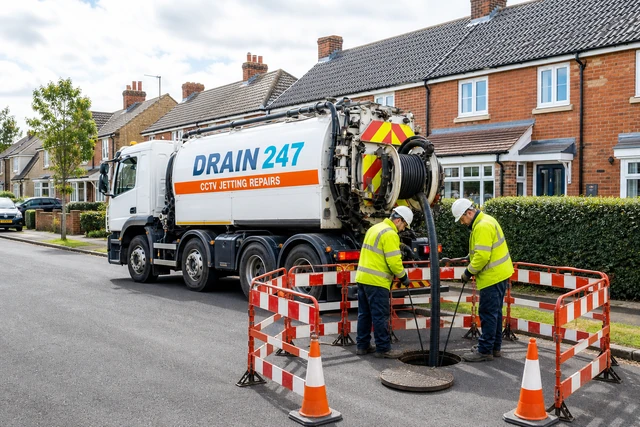
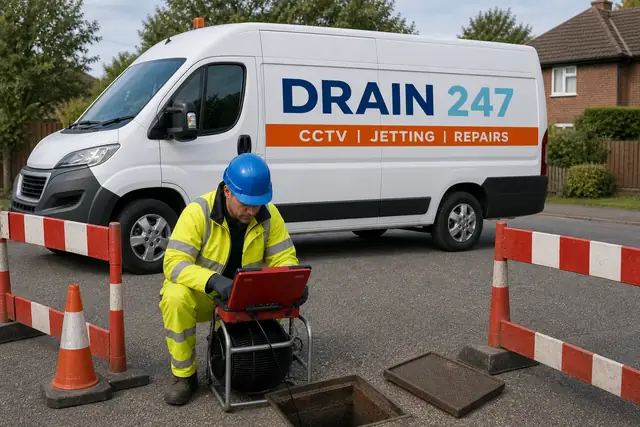
- A Pre-Construction CCTV Survey: Map the precise location, depth, invert levels, and structural integrity of all underground runs.
- Class 1 or Class 2 Build-Over Application: Submit the CCTV footage and structural plans to the water authority if pipes are within the 3m boundary.
- Manhole Relocation: Ensure no live, internal access chambers are sealed beneath living areas without gas-tight, double-sealed covers or complete external re-routing.
- Post-Construction Asset Survey: Run a final camera inspection once the heavy building work is done to prove to the water authority and future buyers that no structural deflection or cracks occurred during the build.
Don’t build a beautiful home on a broken foundation. Contact Drain 247 today to secure your pre-extension drainage survey and bulletproof your property’s structural and legal future.