
Expert Support for Your Drainage Needs in Hertfordshire:
Facing a drainage problem is one of the most stressful experiences a homeowner or business owner can face.
Whether it is a gurgling toilet or a flooded patio, the immediate instinct is to panic and call the first number you find online.
However, as someone who has worked in this industry for years, I want to share a secret that most drainage companies won’t tell you: you might not need to pay for a private contractor at all.
Knowing how the drainage system in towns like Watford, St Albans, and Hemel Hempstead is structured can save you hundreds, if not thousands, of pounds in unnecessary call-out fees.
The 3 Most Common Signs of a Drainage Problem
Before you start looking for tools, you need to identify what is actually happening beneath your feet. Your property is connected to a complex network of pipes, and these three warning signs are your system’s way of asking for help:
- Gurgling Sounds: If you hear strange gurgling noises coming from your drains or toilets, it often indicates that air is trapped in the system. This is frequently a sign that water is struggling to flow past an obstruction further down the pipe.
- Slow Drainage: Water that takes an unusually long time to disappear from your sink, shower, or bath is often the “drip-feed” warning sign of a developing blockage. Ignoring this can turn a simple, slow-draining issue into a complete pipe failure.
- Unpleasant Odours: A foul, rotten-egg smell drifting up from your drains or around your garden gullies is a major red flag. This often suggests a buildup of waste or a problem with your P-traps, which are designed to keep sewer gases out of your home.
The “Try This First” DIY Checklist
Before assuming the worst, there are a few initial steps you can take to assess the situation. However, always prioritize safety and never attempt to clear a blockage if you suspect hazardous sewage or electrical issues.
- Understand the “3 P’s” Rule: Ensure only Pee, Poo, and Paper are being flushed down your toilets.
- Clear Kitchen Obstructions: If the issue is in the kitchen, use a fine mesh strainer to catch food scraps and coffee grounds before they reach your pipes.
- The “Scrape, Don’t Rinse” Habit: Scrape greasy plates and pans into the food waste bin rather than rinsing fats or oils down the sink to prevent the formation of “fatbergs”.
- Assess the Manhole: Check your external inspection chamber—often called a manhole—in your garden. If it is overflowing, you may be looking at a public sewer issue rather than a private one.
When to Call in the Experts
While DIY efforts can manage minor build-ups, there are specific scenarios where professional intervention is necessary to prevent long-term damage.
- Suspected Shared Network Issues: If your pipes connect with those of your neighbours, a blockage downstream is a public sewer issue, making the Water Authority legally responsible for the repair.
- Recurring Blockages: If a drainage problem continues despite your cleaning efforts, it may indicate underlying structural issues like tree root ingress, displaced pipe joints, or a collapsed pipe.
- Structural Damage: If you notice cracks in foundations, damp patches, or sunken ground, call an expert to assess potential structural failure.
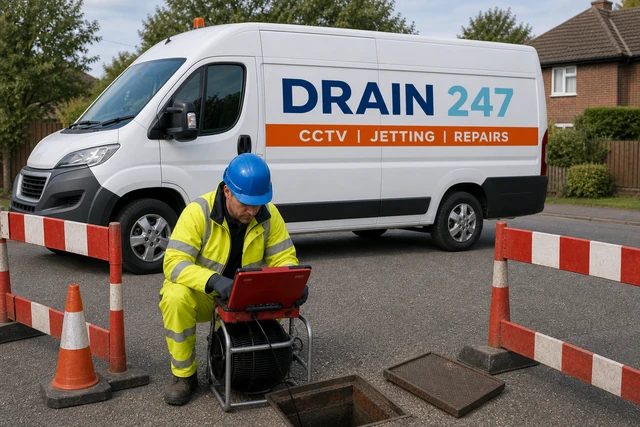
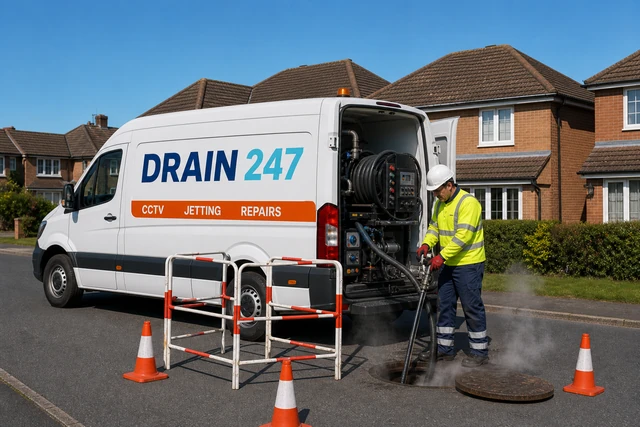
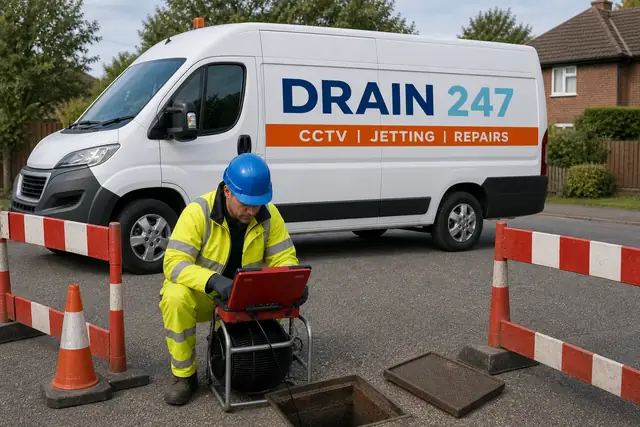
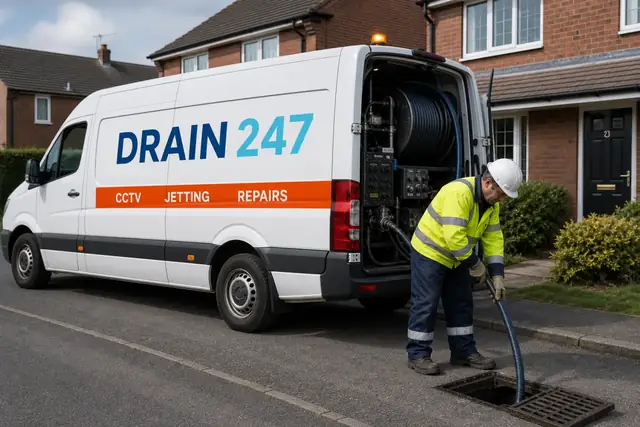
- Lack of Evidence: Professional teams, such as those at Drain 247, use CCTV drain surveys to provide visual proof of why a blockage is occurring, rather than relying on guesswork or “quick-fix” jetting that may not solve the root cause.
Navigating the Water Authority: Getting the Right Help
When you contact a major water authority like Thames Water or Anglian Water, remember that you are dealing with a high-volume corporate call center. To get the right outcome, you must use specific language that signals you understand your legal rights under the Transfer of Private Sewers Regulations 2011.
The Pro-Script for Your Call
- You: “Hello, I am calling to report an issue with the wastewater network at my property. I have identified external sewage flooding (or a surcharge of waste) coming from a manhole, and I have strong reason to suspect the blockage is located within the shared public sewer network or public lateral drain.”
- Agent: “Sir/Madam, if the manhole is on your property, you will need to contact a private drainage engineer to clear it first.”
- You: “I understand your standard policy, but looking at our property layout, this pipe receives waste from my neighbours. Under the Transfer of Private Sewers Regulations 2011, this constitutes a shared asset under your jurisdiction. Can you please consult your asset maps right now to confirm where your public responsibility ends relative to my boundary?”
- Agent: “Let me check… Okay, I see the map. We can log an engineer visit, but if they find it is a private issue, you may be charged.”
- You: “That is perfectly fine. Please log the job and provide me with a job reference number for my records.”
Why This Strategy Works
- Keywords Matter: Using terms like “external sewage flooding,” “lateral drain,” and “shared asset” forces the call out of the standard “domestic plumbing” queue.
- Health Mandates: Water companies are legally required to respond rapidly to active sewage flooding due to strict environmental and health mandates.
- The Power of the Reference Number: If you are forced to hire a private contractor like Drain 247, the reference number serves as evidence if the CCTV inspection proves the blockage was indeed in the public section, allowing you to claim a full reimbursement.
Preventing Future Disasters – The Reality of Fatbergs
Many homeowners and businesses in areas like Watford, St Albans, and North London rely on ancient, narrow Victorian clay pipe infrastructure that was never built for modern human consumption. Protecting these systems requires a fundamental shift in how we treat our household waste.
- The Chemical Reaction: Pouring cooking fats, oils, or grease down your kitchen sink causes them to cool and solidify as they travel into the cold underground pipes.
- The Process of Saponification: These substances undergo a chemical process called saponification, which transforms them into a rock-hard, soap-like material.
- The “Flushable” Myth: When you combine this sticky grease layer with items like wet wipes or sanitary products—even those marketed as “flushable”—you create a massive blockage known as a fatberg.
- The Outcome: These obstructions grow over time, eventually sealing the pipe shut and causing significant back-ups.
A Quick Checklist for Drain Preservation
- Follow the “3 P’s” Rule: Only Pee, Poo, and Paper should be flushed down a toilet.
- Use Mesh Strainers: Place fine mesh strainers in kitchen sinks to catch food scraps and coffee grounds before they enter the system.
- Scrape, Don’t Rinse: Always scrape greasy plates, frying pans, and roasting trays into a food waste bin before washing them.
- Invest in Preventative Maintenance (PPM): We recommend scheduling a professional CCTV survey and flush every 12 to 24 months to catch minor root ingress or scale buildup early.
Need Professional Help?
We know that navigating a drainage problem can be overwhelming. While this guide helps you determine if the Water Authority is responsible, we also know that sometimes you just need the job done right. If you have confirmed the issue is on your private property—or if you simply want a professional team to handle the stress for you—we are here to help.
[Click here to view] our Professional Drain Unblocking Services and let our local Watford team resolve the problem with transparent, evidence-based solutions.
Need immediate expert advice? Call Drain 247 at 0208 387 5591 to check your property layout before you spend a single penny.