A drainage contractor fixes a drain in three stages: find the fault with a CCTV camera, clear the pipe, then repair it, usually from inside with a lining and only by digging when lining will not work. This guide explains each repair method, when it is used and what to expect at home.
Step 1: Diagnose with a CCTV Survey
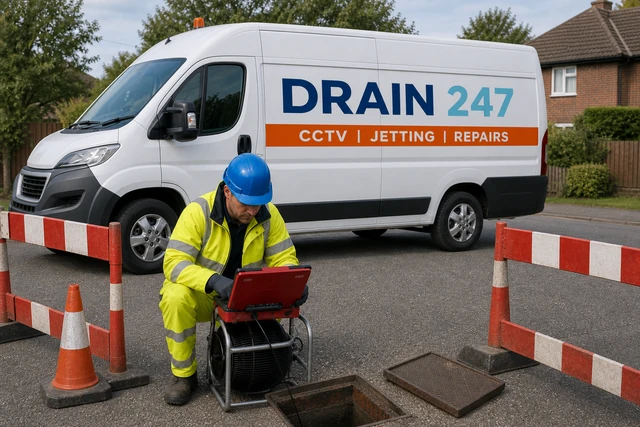
Before any repair, the pipe is cleaned and inspected with a camera. The footage shows the type of defect (crack, displaced joint, root intrusion, deformation or collapse), where it is and how deep. That decides the repair. See our CCTV drain survey service.
Step 2: Clear the Pipe
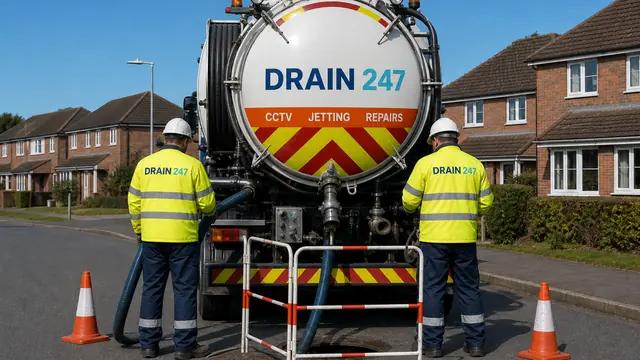
Linings only bond to a clean pipe. Engineers use high-pressure jetting to remove silt and grease, and mechanical cutters to remove roots and scale.
Step 3: Choose the Repair
Patch Lining (Localised Repair)
A short sleeve of glass-fibre matting soaked in resin is pulled to the defect on an inflatable packer, pressed against the pipe wall and left to cure. Best for a single crack, a leaking joint or a small root entry point. Often done in a few hours.
Cured-In-Place Pipe (CIPP) Lining
A resin-soaked liner is inserted along the whole length between two chambers and cured with hot water, steam or UV light, forming a new pipe inside the old one. Best when there are several defects along a run, or for older clay and pitch fibre pipes.
Pipe Bursting
A specialist method where a bursting head breaks the old pipe outwards while pulling a new one in behind it. It is used for some full replacements where excavation would be very disruptive, and needs suitable ground and access.
Excavation and Replacement
Where a pipe has collapsed, lost its shape, or sits at the wrong level, digging down and replacing it is still the right answer. Read about our drain excavation and replacement work.
No-Dig or Dig: Which Is Right?
| Problem | Usual repair |
|---|---|
| Single crack or open joint | Patch lining |
| Several defects along one run | CIPP lining |
| Root intrusion | Cut roots, then patch or full lining |
| Collapse, severe deformation, or a back-fall | Excavation and replacement |
Who Pays?
You are usually responsible for drains within your boundary that serve only your home. Ofwat explains that since 1 October 2011 your responsibility usually ends at the boundary of the property, and Thames Water is responsible for sewers shared with neighbours, even under your garden or driveway. Some home insurance policies cover accidental damage to drains, so check yours.
Frequently Asked Questions
How Long Does a No-Dig Repair Take?
A patch repair is often done in a morning. A full lining between two manholes is usually completed in a day.
Will I Need to Move Out or Turn the Water Off?
No. You will be asked not to use the drain while the lining cures.
How Do I Know the Repair Worked?
Ask for a CCTV check after the repair. We film the finished pipe so you can see it.
Need a Drain Repaired?
Drain 247 carries out drain repairs, patch lining and CIPP lining for homes across Watford, St Albans, Hertfordshire and North West London. Call 0208 387 5591.