CCTV Drain Surveys
New Cracks After the Hottest Summer on Record? How Your Drains Fit Into Subsidence
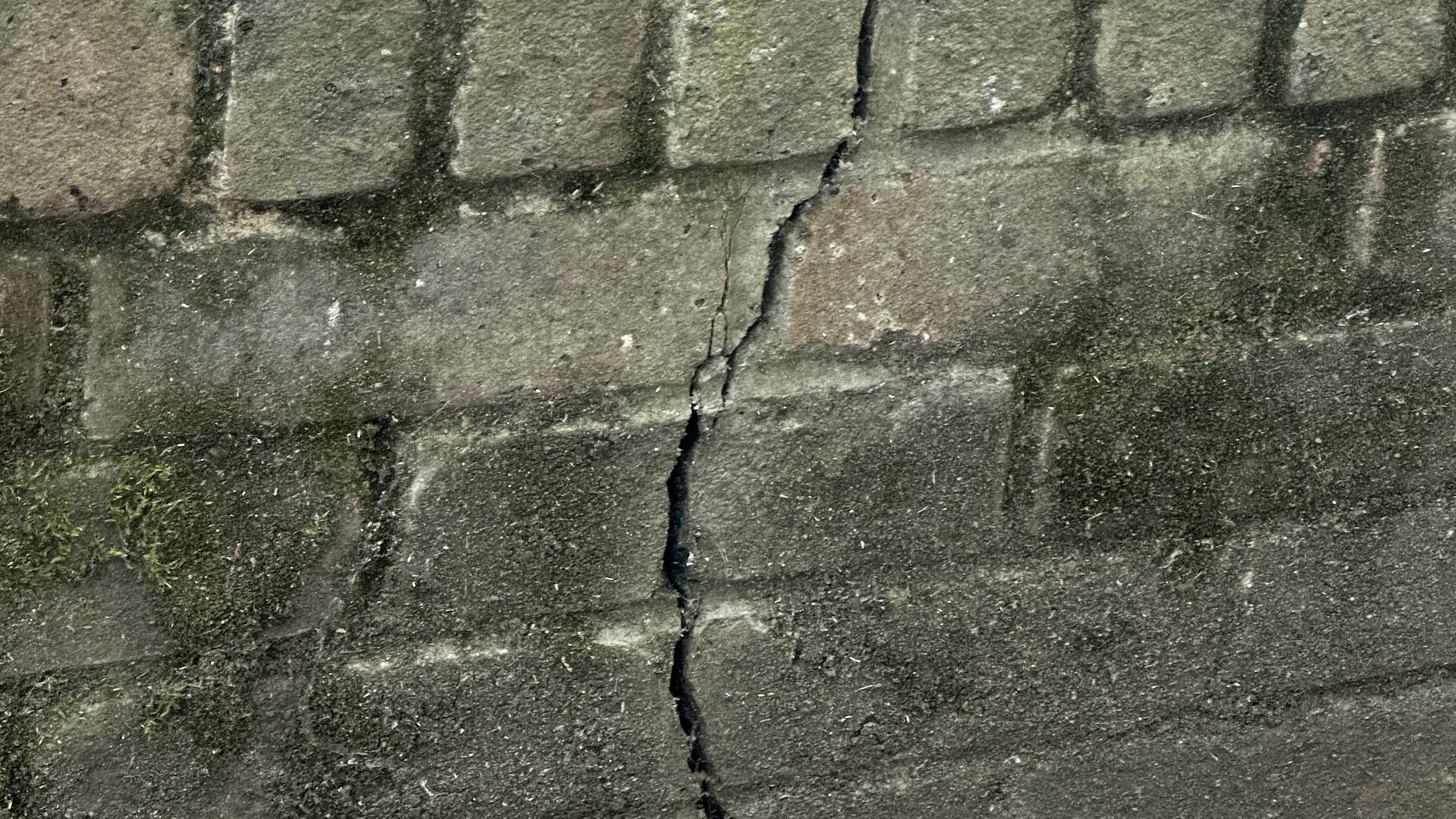
The short answer: your drains can be part of a subsidence problem in two ways. A leaking drain can soften or wash away the soil under a foundation, and ground that shrinks in a drought can crack or pull apart old drain joints, which then start to leak. After the driest July to September on record for Hertfordshire and North London, insurers are handling far more claims than usual, and drain testing is one of their standard checks. If a new crack appears, photograph and measure it, tell your insurer before anyone starts repairs, and expect the drains near the crack to be looked at with a camera.
Why Are So Many Homes Cracking This Autumn?
Because the ground under them has dried out more than at any time in modern records. Summer 2026 was the warmest on record for the UK, and locally the Environment Agency says the three months to the end of September were the driest on record for the Hertfordshire and North London area. The six months to September were the driest on record as well. By the end of September, soil moisture deficits across the south-east were around twice the long-term average, and most areas had the highest deficit on record for the time of year.
That matters because so much of our patch is built on clay. The British Geological Survey describes London Clay as very susceptible to shrinking and swelling, and it underlies much of North West London and the south of Hertfordshire. When clay loses water it shrinks, and a house built on it can drop slightly at one corner or along one wall. Older homes are the most exposed: Which? points out that Victorian and Edwardian houses often have shallower foundations than modern ones.
The claims figures show it. Ground engineering firm Geobear told Insurance Edge that its subsidence enquiries were running at almost 300% of typical annual levels, and that in the week to 13 October the soil moisture deficit under deciduous trees in south-east England and Greater London reached 332.4mm. That's the highest figure the Met Office's soil moisture model can record.

Hasn't the Rain Fixed It?
Not yet, and it can make some things worse before it gets better. A heavy shower wets the top few centimetres, but clay a metre or two down can stay dry for months. Geobear's figures suggest the ground needs at least 20mm of rain a week over several consecutive weeks before the deficit starts to reverse. As the firm put it, "the ground responds much more slowly than the weather we experience at the surface."
When clay does take water back, it swells. Writing in The Conversation, Arya Assadi Langroudi of the University of East London explains that swelling clay can push foundations upwards, which is known as heave. So cracks can close, stay put or open in a different place over the winter. That's one reason insurers often monitor a crack for months before deciding what to do.
How Can a Leaking Drain Cause Subsidence?
By putting water where it shouldn't be, day after day. Every time you run a bath or it rains on the roof, water goes into the drains. If a joint has opened or a pipe has cracked, some of it soaks into the ground beside the foundation instead.
What that does depends on the soil:
- Sand and gravel: the escaping water carries fine particles away, leaving loose ground or small voids under the footing. The ABI says sandy, gravelly soils are the most vulnerable to leaking drains.
- Clay: the soil around the leak softens and loses strength, and it swells locally while the ground around it stays dry. The BGS describes short-term, unseasonal movement caused by leaks from water supply pipes or drains.
- Soakaways: a soakaway that's too close to the house, or has silted up, does the same job as a leak. The Conversation notes that rapid subsidence may be further escalated by a leaking drain or poorly sited soakaway.
This is why leaks tend to cause damage at one specific spot rather than along the whole house.
Can Subsidence Damage Your Drains?
Yes. Many older homes in Hertfordshire still have the clay pipes they were built with, laid in short lengths with rigid joints. When the soil around them shrinks, the pipe loses support. Joints open, sections drop out of line and pipes crack, particularly near the house where they pass through or under the footings. Tree roots then find the gaps, as we explain in our guide to tree roots in drains. We covered how dry clay cracks pipes in our earlier post on blocked drains after heavy rain.
That creates a loop: the ground moves, the drain cracks, the drain leaks, and the leak softens the ground further. It's also why an insurer will want to know which came first.
How Do You Tell If a Crack Is Subsidence?
The ABI's guide lists the warning signs. Look for:
- cracks that run diagonally and are wider at the top than the bottom
- cracks thicker than a 10p coin, especially around doors and windows
- cracks that show inside and outside in the same place
- doors and windows that start to stick for no obvious reason
- wallpaper that ripples or tears where it meets the ceiling
Fine, even cracks up to about 3mm are usually just plaster shrinking or a new house settling. Crack width alone doesn't tell you the cause, though, so it's what the crack does over time that counts.
In our experience, the cracks that turn out to involve the drains follow a familiar pattern. They're at a back corner or on a rear extension, close to where a rainwater downpipe, the kitchen gully and the soil stack all join the underground drain. When we put a camera in, we typically find an open or displaced joint, or a cracked bend, within a metre or two of the crack. Gutters that overflow or downpipes that empty straight onto the ground next to the wall can soak the same spot, so check those too.
What Do Insurers Check, and Where Do the Drains Come In?
Subsidence claims are investigated before anything is fixed. NFU Mutual's guide lists what that can involve: drain testing, trial holes to look at the foundations and soil, and monitoring and measuring the cracks, sometimes over several months. If a damaged drain is part of the cause, repairing it is one of the ways the ground is stabilised. Where the damaged pipe belongs to the water company, the insurer may take it up with them. At the end of a claim, you should get a certificate of structural adequacy, which helps when you come to sell.
Drain testing usually means a CCTV survey, sometimes with a water test to see whether the pipe holds water. The survey records where every defect is, how far it is from the manhole and how serious it is, so the engineer can match it against the crack on the wall.
Two cover points are worth knowing:
- The excess. Which? found that most insurers cover subsidence as standard, but usually with a £1,000 excess. Only four of the 71 policies it checked had a lower compulsory excess. Many policies also exclude patios, garden walls and drives unless the house itself is damaged at the same time.
- The drain itself. Most buildings policies also cover accidental damage to the underground pipes you're responsible for. Hamilton Fraser, writing for landlords' association the NRLA, says this can include damage from tree roots or movement of the subsoil, but not wear and tear, and that the cost of tracing a leak may not be covered. Check your own policy wording.
Who owns the pipe matters too. Since 2011, most shared drains and the pipes beyond your boundary belong to the water company. Our guide to who is responsible for a blocked drain explains where that line usually falls.

What Should You Do If You've Found a New Crack?
- Photograph and measure it. Put a ruler across the widest point, date the photo, and take another from the same spot every few weeks. Langroudi recommends keeping exactly this kind of record.
- Check gutters, downpipes and gullies near the crack. Make sure water is going into the drain, not overflowing or soaking the ground beside the wall.
- Tell your insurer before any repairs. Ask whether they'll send their own investigators or accept an independent survey. Digging up or lining a drain first can remove the evidence they need.
- Leave mature trees alone for now. Taking out a big tree on clay can cause heave as the ground rewets, and The Conversation's advice is not to rush into it. Get advice before cutting anything back.
- Tell your landlord or lender if needed. The BGS advises informing your insurer, lender or landlord and getting a structural surveyor if you suspect movement.
- Look out for drain symptoms. Slow drains, a smell outside, a damp patch on an outside wall or a dip in the paving near a manhole can all point to a broken pipe.
When Is a CCTV Drain Survey Worth Paying For?
A survey makes sense if the insurer asks for drain evidence, if the crack is near a drain run, or if you're seeing drain symptoms next to the damage. It's also worth it if you're buying an older house in a clay area this winter.
Our CCTV drain surveys are WRC-approved and accepted by all insurers. You get the footage, stills and a written report showing where each defect is. Domestic surveys start from £150, at a fixed price agreed before we start. If the survey finds a crack or open joint, it can often be sealed with a drain repair such as a patch liner from inside the pipe, without digging, once your insurer has agreed the work.
Common Questions
Does Home Insurance Cover Subsidence Caused by a Leaking Drain?
Usually, yes. Most buildings policies cover subsidence as standard, typically with a £1,000 excess. Repairing the drain may also be covered as accidental damage to underground pipes, although wear and tear is excluded. Check your policy and call your insurer before any work starts.
Will a CCTV Survey Prove My Drains Caused the Subsidence?
Not on its own. A survey shows the condition of the pipe and exactly where any defects are. The insurer's engineer decides the cause, using the drain evidence alongside soil tests, trial holes and crack monitoring.
Can Subsidence Cracks Close Up Again When It Rains?
They can. Clay soil shrinks as it dries and swells when it gets wet again, so some cracks open in summer and close in winter. That's why insurers often monitor a crack for several months before deciding on a repair.
Should I Have My Drains Checked If There Are No Cracks?
Not as a matter of course. It's worth doing if you live in an older house with clay pipes near large trees, if your drains are slow or smell, or if you're buying a property.
Who Is Responsible for a Cracked Drain Under My House?
If the pipe serves only your property and is within your boundary, it's yours. Since 2011, most pipes shared with neighbours and those beyond your boundary belong to the water company. A CCTV survey can show where the damage is relative to that line.
Worried About a Crack Near Your Drains?
We're a family-run firm and we've been looking after drains across Watford, Hertfordshire and North West London since 1986. If your insurer wants drain evidence, or you'd just like to know whether your drains are behind a new crack, call us on 0208 387 5591. A real person answers 24 hours a day, and we'll agree a fixed price with you before we start.