Blocked Drains
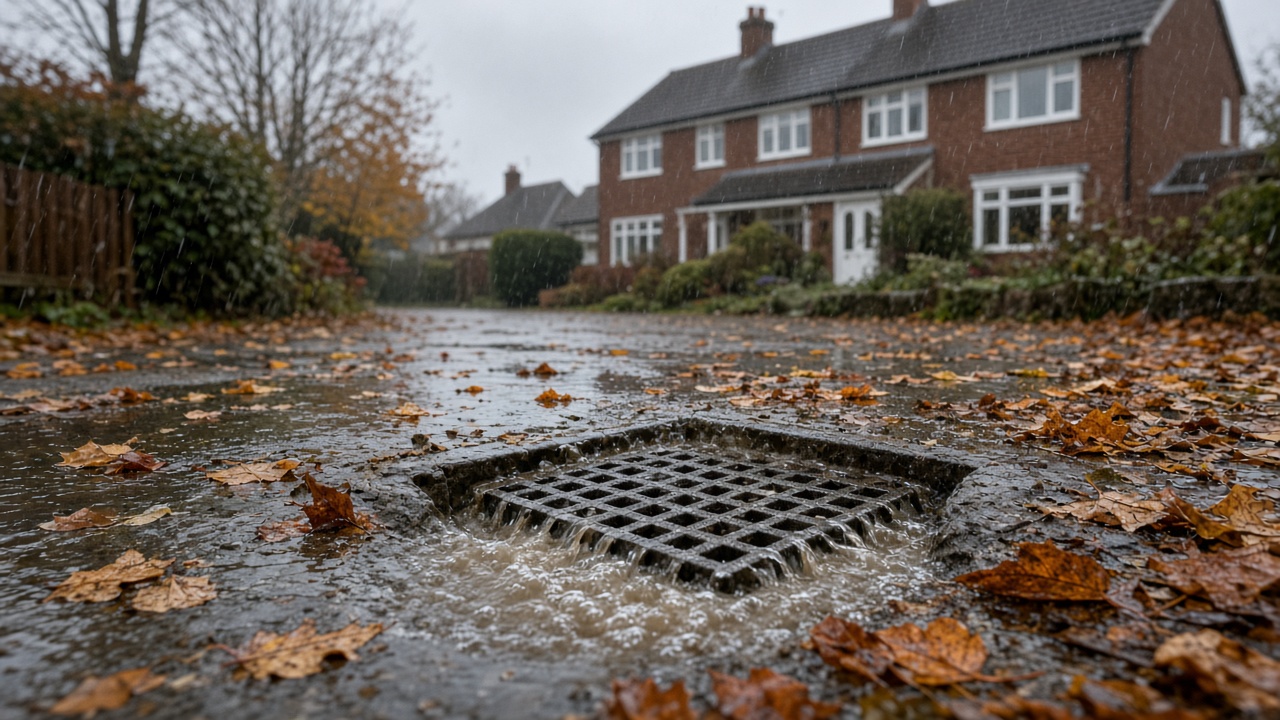
Blocked Drains After Heavy Rain: Why This Autumn Needs Extra Care in Herts and North West London
By Michael Lee, Drainage Manager at Drain 247 · Published 19 October 2026 · Family-run in Watford since 1986
The short answer: after one of the driest summers on record, the first heavy autumn rain is a hard test for drains in Hertfordshire and North West London. Baked ground sends rainwater straight into gullies that are already full of leaves and silt, and clay soil that shrank over the summer may have moved or cracked older pipes. A 30-minute check of gutters, gullies and inspection chambers now, plus a CCTV survey if you spot warning signs, is the cheapest way to avoid blocked drains after heavy rain this winter.
Key takeaways
- Summer 2026 was the UK's hottest on record, and England had its driest July in a series going back to 1836 (Met Office).
- The Environment Agency still lists Hertfordshire and North London as being in drought, and Thames Water says the ground is the driest it has been since 2001.
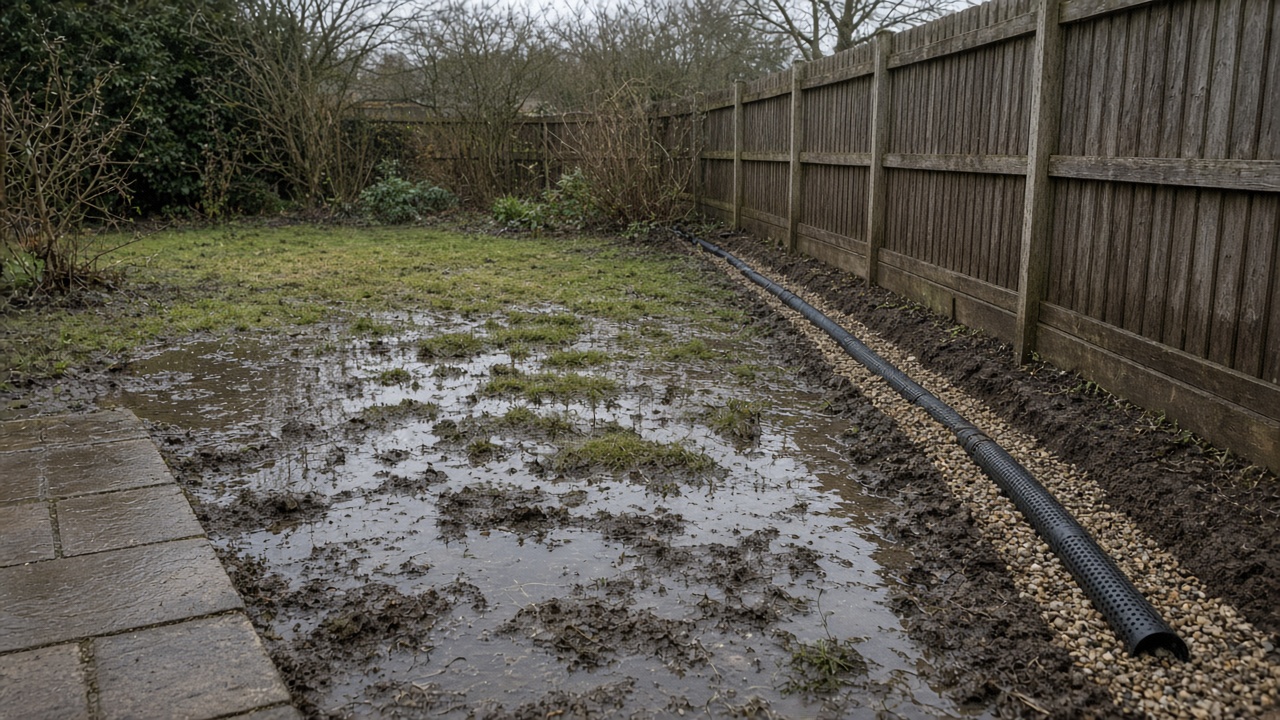
- Hard, dry ground sheds a downpour, so more water hits your gullies and drains at once.
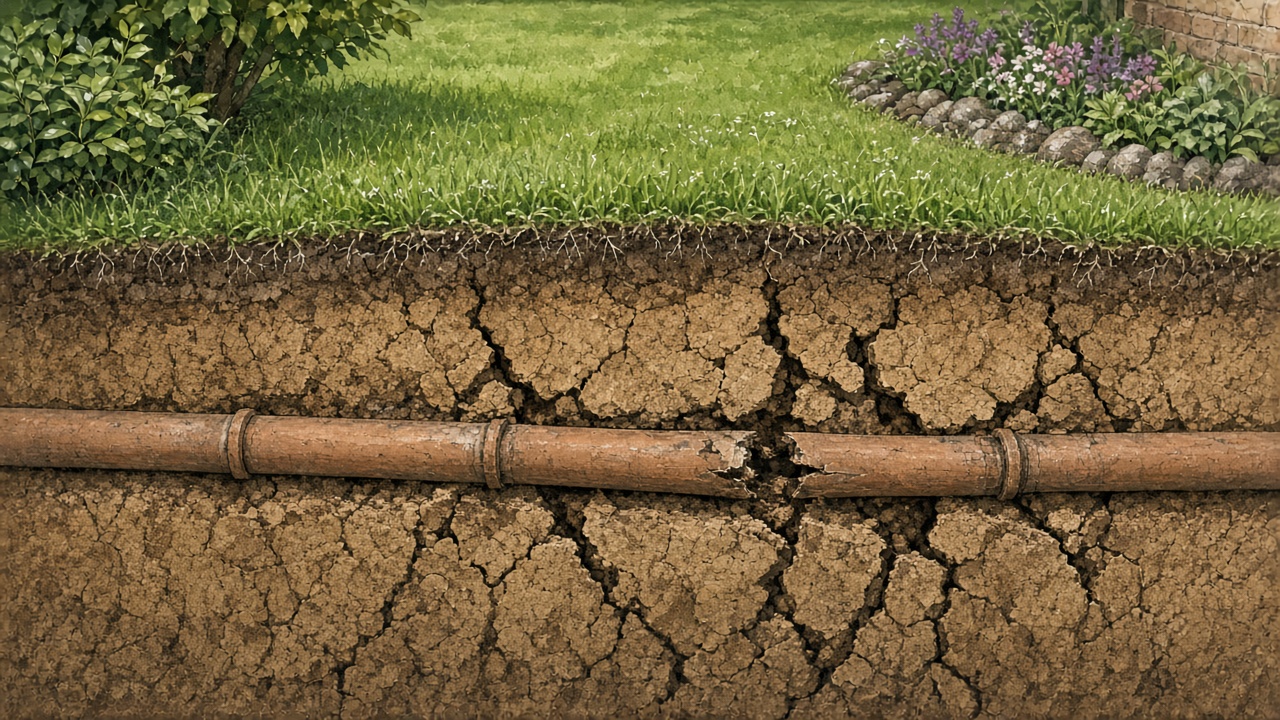
- Shrinking clay can open joints or crack older pipes. The damage often shows when the rain returns.
- Clear gullies by hand and test them with a bucket – hosepipe bans still cover hosing down paths and patios.
- Drains serving only your property, inside your boundary, are yours. Shared sewers and lateral drains outside it are Thames Water's.
- Repeat smells, gurgling, slow gullies or new cracks in paving over a drain run are worth a camera inspection.
Why Is This Autumn Riskier for Drains Than Usual?
This year's autumn rain is landing on ground that has had very little water for months. The Met Office says summer 2026 was provisionally the UK's hottest on record, with an average mean temperature of 16.5°C, and England received only 64% of its average summer rainfall. July was the worst of it: England recorded just 6.5mm of rain, its driest July since records began in 1836, and Greater London was one of 19 counties that saw 1mm or less all month.
Autumn hasn't fixed it. In the Thames catchment, September rainfall was only 50% of the long-term average, and Thames Water describes ground conditions as the driest since 2001. The Environment Agency's weekly report for early October lists Hertfordshire and North London among the areas in drought.
In the third week of October 2026, the Met Office forecast a wet and windy spell for London and the South East, with heavy rain at times, and issued a yellow wind warning for Friday 23 October covering parts of southern England and Wales, though not Hertfordshire or London. When we wrote this on 19 October, the system hadn't been named; this season's first name is Austen.
That combination catches drains out, for three reasons.
Baked Ground Sheds Water Instead of Soaking It Up
When soil has been dry for weeks, it doesn't behave like a sponge. During the 2022 drought, the Met Office's chief forecaster warned that sun-baked soils become "hard almost impenetrable surfaces", so heavy rain washes off them instead of soaking in, which raises the risk of flash flooding.
So lawns that would normally absorb rain send it across the patio to the nearest gully. Thames Water estimates that an average house produces around 5,500 litres an hour of run-off from its roof and driveway during a storm, compared with about 570 litres of wastewater a day from a family of four.
Clay Soil Has Been Moving Around Your Pipes
The British Geological Survey calls clay shrink–swell the most damaging geohazard in Britain today, and says susceptible clays such as London Clay are most common around London and the south-east. Most of the movement happens in the top 1.5 to 2 metres of ground, which is where most garden drains run.
The Association of British Insurers reported that insurers paid out £72 million for domestic subsidence claims between April and June 2026, with the average claim reaching a record £20,000. The ABI's own advice for older homes includes maintaining nearby trees and drains and fixing leaking pipes.
It works both ways: the BGS lists leaking drains as a cause of short-term ground movement. A dry summer can open a joint, and a winter of leaking into the soil can make things worse.
A Summer's Worth of Leaves, Silt and Roots
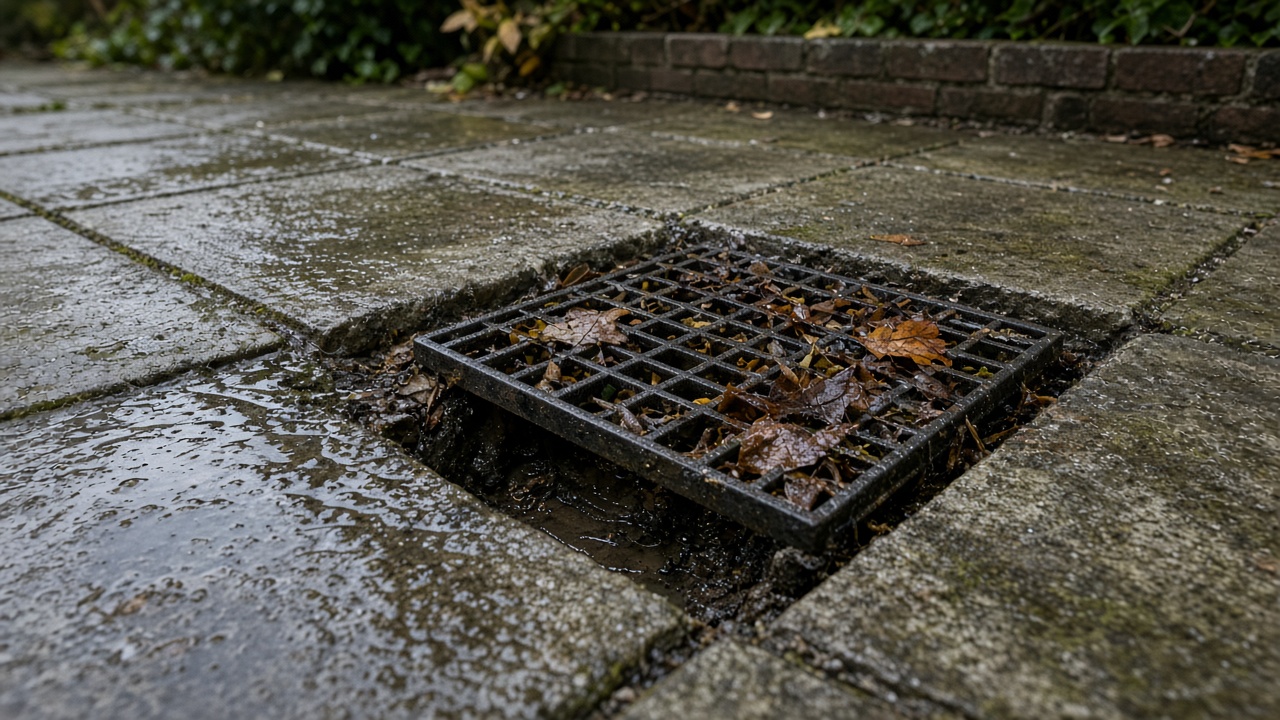
Gullies and gutters have had months to collect grit, moss and early leaves with no rain to wash them through. The first downpour pushes the lot down the pipe at once. Underground, roots spend dry summers hunting for water, and a cracked clay joint is an easy target. If you have mature trees near your drain run, our guide to tree roots in drains explains what to look for and who is liable when the tree isn't yours.
What Are the Warning Signs Your Drains Won't Cope?
Look out for:
- Gurgling from sinks, baths or toilets when it rains or another appliance drains.
- Slow gullies – water sitting around the grate minutes after a shower.
- Smells near outside drains or indoors, especially on warm, damp days.
- Water rising in the toilet pan during heavy rain.
- Dips or new cracks in paving or lawn along the line of a drain.
- Rats near the house – they often get in through broken drains.
Two or three of these together usually means a partial blockage or a defect further down the line.
A 30-minute Autumn Drain Check You Can Do This Weekend
- Clear gully grates. Lift out leaves and silt at the foot of downpipes and on driveways, and bag it rather than pushing it down the drain.
- Check gutters and downpipes. Look for sagging gutters, plants growing in them, or a downpipe that has come loose from its gully.
- Test with a bucket, not a hose. Pour a bucket of water into each gully and watch it go. It should clear in seconds. In mid-October 2026, Thames Water's hosepipe ban was still in place across its whole supply area, and Affinity Water's ban still covered its Central region, which includes Hertfordshire. Both rule out hosing down patios and paths, but a bucket or watering can is fine.
- Lift an inspection chamber cover if you safely can. In a healthy chamber, water flows along the open channel at the bottom and the chamber stays mostly empty. If it's half-full of standing water, there's a blockage downstream.
- Walk the drain run from chamber to chamber, looking for sunken paving or cracks.
- Bin the fat and the wipes. Cooking fat sets hard in cold pipes, and wet wipes don't break down, whatever the packet says.
If the chamber is holding water or the bucket test fails, call someone rather than reaching for drain rods.
Who Is Responsible for a Blocked Drain After Heavy Rain?
The rules changed on 1 October 2011, when most shared private sewers and lateral drains connected to the public sewer before 1 July 2011 transferred to the water companies.
- Your responsibility: drains inside your property boundary that serve only your property, including gullies and gutters. Thames Water's sewer pipe responsibility guidance says this applies "so long as they serve just your property".
- The water company's responsibility: public sewers under roads and pavements, any sewer you share with neighbours (even under your garden or driveway), and the lateral drain – the part of your own pipe that runs outside your boundary to the sewer.
- The council's responsibility: road gullies on public highways. Hertfordshire County Council maintains over 180,000 road drains and says reported blockages are cleared within 12 months. It doesn't clean drains on private roads or car parks, which are down to the landowner.
Affinity Water only supplies clean water, so even if it sends your water bill, your sewers are usually Thames Water's – Affinity's postcode checker will confirm it. Semis and terraces often share a run with next door, which can make a blockage in your garden the water company's job. Our article on blocked drain responsibility in Hertfordshire goes through the common layouts. If you're not sure, a quick inspection can show where the blockage is, and you'll have evidence to send to Thames Water if it's theirs.
What Our Engineers See After a Dry Summer
We've been unblocking and repairing drains around Watford since 1986, and dry summers that turn wet tend to follow a pattern. The first busy spell comes with the first proper downpour.
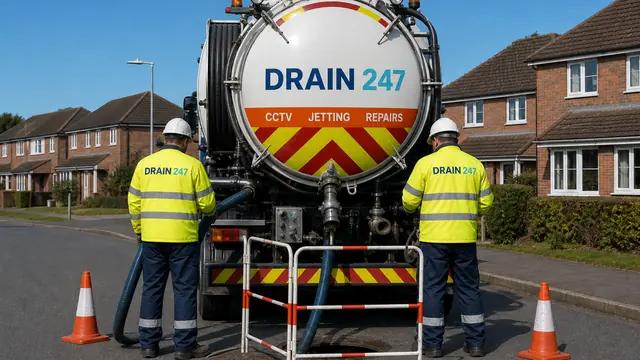
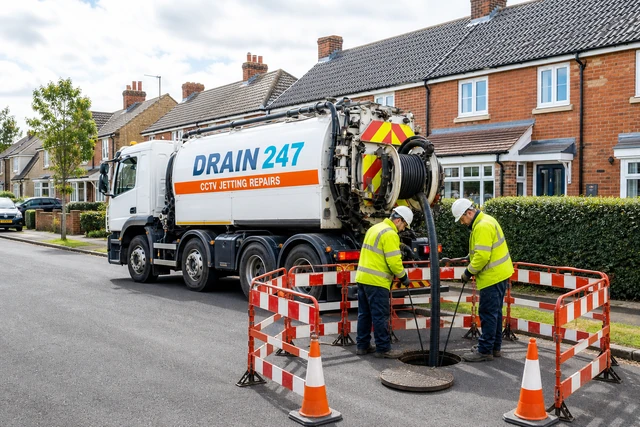
A call we get a lot every autumn is a gully overflowing at the foot of a downpipe. Typically the grate is clogged with leaves and the pot underneath is solid with silt and moss, so rainwater spills across the patio towards the back door. Clearing the pot and jetting the short run to the chamber usually sorts it. If the chamber is backing up too, we often find wipes and paper matted together with kitchen fat on the benching or at a joint.
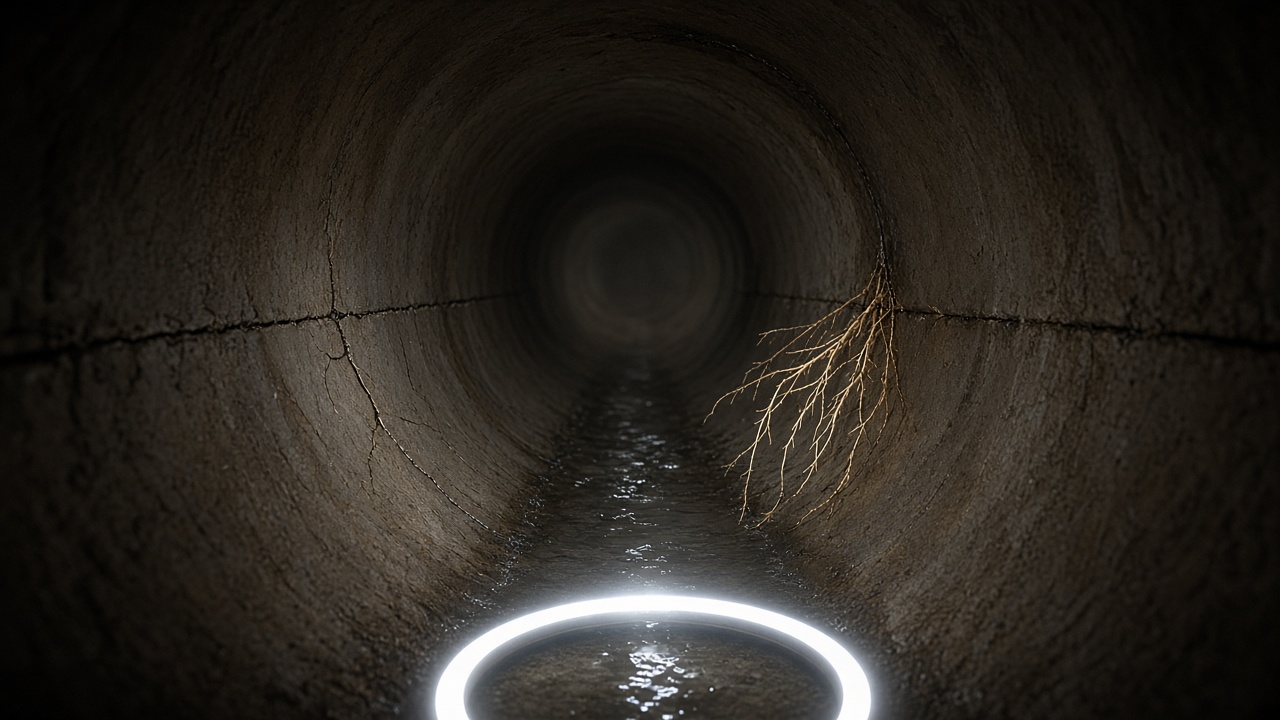
The second spell comes a few weeks later, when drains quietly damaged over summer give up. The usual story is a drain that's cleared and blocks again within weeks. On older clay runs, the camera typically finds a joint that has dropped or shifted, leaving a lip that catches paper, often with fine roots coming through the gap. Clearing it gets the water moving but doesn't fix the joint, which is why we use a camera on repeat call-outs and why a patch liner is often the longer-term answer.
Interceptor traps – U-bends in the last chamber of many older homes – are another regular culprit. Thames Water says over 20% of the blockages it clears are at interceptor traps. Typically the last chamber fills because wipes and paper have caught in the trap's tight bend.
Homes built from the 1950s to the 1970s may also have pitch-fibre pipes, which can deform and blister with age. Typically we find the pipe squashed into an oval or blistered inside, narrowing the bore until it keeps catching debris; hot water and fats speed this up. Some runs can be re-rounded and lined without digging, while collapsed sections need digging out. A camera survey tells you which.
When Is a CCTV Drain Survey Worth It?
If a drain unblocking visit clears the problem for good, you may not need a survey.
A survey is worth booking when:
- the same drain has blocked more than once in a year;
- you've noticed gurgling, smells or rats and can't find an obvious cause;
- paving, a path or a wall near a drain run has cracked or dropped since the summer;
- you're buying, extending, or need evidence for an insurance claim.
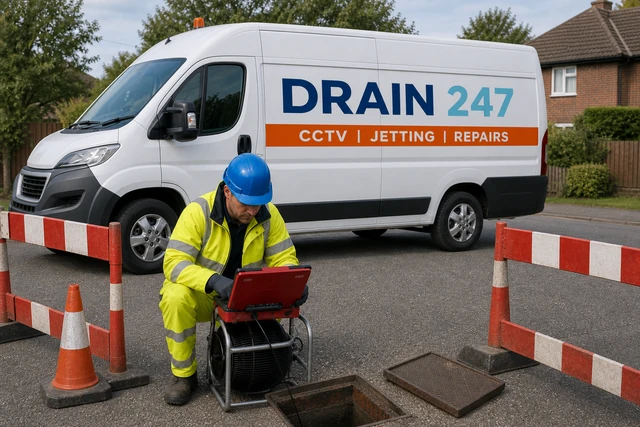
A CCTV drain survey records cracks, displaced joints, roots and build-up, and you get the footage and a written report. Where a pipe is damaged but still in line, no-dig drain repair such as patch lining or a full CIPP liner often fixes it without digging up the patio.
What Should You Do If a Drain Overflows During a Storm?
If sewage or dirty water is coming up from a manhole or gully:
- Stop adding water – no flushing, washing machine or baths until it's cleared.
- Keep children and pets away. Thames Water's sewer flooding guidance suggests keeping off affected turf for 13 days in autumn.
- Take photos before levels drop – for the water company and your insurer.
- If the sewer is shared or public, report it to Thames Water on 0800 316 9800. It aims to attend within 4 hours for internal flooding and 24 hours for external, and pays compensation automatically for internal sewer flooding.
- Tell your insurer about any damage inside – Thames Water warns that not reporting it could breach your policy terms.
- If it's your drain, call a drainage engineer and get the price before anyone sets off.
Blockages in the public network are common. Water UK estimates there are around 300,000 sewer blockages a year in the UK, and that more than 3,000 homes a year are flooded because of them.
A Note for Landlords and Small Businesses
Ask tenants to report gurgling, smells or slow drains early. Businesses with yards or car parks should check channel drains now, as the council won't clear drains on private land.
Frequently Asked Questions
Why Do Drains Block After Heavy Rain?
Heavy rain washes leaves, silt and debris into gullies and pipes all at once, and dry ground sheds water faster. Any partial blockage that coped in dry weather then backs up.
Can a Dry Summer Damage Drain Pipes?
Yes. Clay soil shrinks as it dries and swells when wet, which can open joints and crack older clay pipes. Roots then get in through the gaps. Damage often shows when autumn rain returns.
Who Pays to Unblock a Drain in Hertfordshire?
You pay for drains inside your boundary that serve only your property. Thames Water is responsible for shared sewers, public sewers and the lateral drain outside your boundary. Hertfordshire County Council looks after road gullies on public highways.
Can I Use a Hosepipe to Clear My Drains During the Hosepipe Ban?
Thames Water's ban prohibits hosing down paths, patios and other outdoor surfaces. A bucket or watering can is allowed and is enough to test a gully. Check your water company's current rules first.
How Do I Know If My Outside Drain Is Blocked?
If it's safe, lift the inspection chamber cover. Standing water in the chamber means a blockage downstream. Slow gullies, gurgling and smells are other signs.
Is a CCTV Drain Survey Worth It After a Dry Summer?
Yes, if you've had repeat blockages, unexplained smells or rats, or new cracks in paving near a drain run. It shows exactly what's wrong and where, so you only pay for the repair you need.
What Should I Do If Sewage Comes Up from a Manhole?
Stop using water indoors, keep people and pets away, and take photos. Report shared or public sewers to Thames Water on 0800 316 9800; for a private drain, call a drainage engineer.
Need a Hand Before the Weather Turns?
If your gullies are slow, a chamber is full or you'd just like someone to look before winter, call us on 0208 387 5591. A real person answers 24 hours a day, we'll tell you the price before we set off, and there's no call-out fee. Or email info@drain247.co.uk, or use our contact page. We're at 44 Clarendon Road, Watford, covering Hertfordshire and North West London.
Figures correct at the time of writing (19 October 2026); sources are linked in the text.