Blocked Drains
Leaf-Fall Checklist: Clear Your Gutters, Downpipes and Gullies Before the November Rain

The short answer: Storms Austen and Boelo stripped a lot of leaves off the trees in late October, and plenty of them ended up in gutters, hoppers and gullies. The Met Office expects a mostly dry spell from about 6 to 15 November, with rain and strong winds more likely in the second half of the month. That dry week is the best time to clear things. Work through the checklist below from the top down: gutters, then downpipes, then the gully at ground level, then a water test. If water still backs up after that, the blockage is probably underground. That's a job for drain rods or a jetter, not a ladder.
Why Clear Gutters and Downpipes Now?
The timing is better than usual. The Environment Agency's latest drought report says the storms made the week to 29 October the wettest across England since October 2024, and October's rainfall had already reached 111% of the long-term average. Hertfordshire and North London are still officially in drought, though. The same report says the area needs at least 120% of average rainfall over the next six months to end the drought by spring. Plenty more rain is needed, so gutters and gullies need to be clear for it.
The Met Office's long-range forecast gives you a window. From about 6 to 15 November, high pressure should keep things mostly dry and a little colder than average. After that, unsettled weather is more likely, with spells of rain and the potential for strong winds. Dry leaves are easier to scoop, and dry rungs are safer.
The Society for the Protection of Ancient Buildings runs Maintenance Week from 9 to 15 November, finishing with National Gutters Day on Sunday 15 November. Its advice works for any house: spend five minutes looking at your gutters, hopper heads and gullies, then five minutes clearing whatever you can reach safely.

The Leaf-Fall Checklist: Gutters to Gullies
Work from the top down. If you clear the gully first, the next bucket of leaves from the gutter washes straight back into it.
- Check your ladder and your footing. The HSE's ladder guidance is the rule to follow: one unit out for every four units up (about 75°), don't work off the top three rungs, and keep three points of contact. Never rest a ladder against a plastic gutter, because it can crack or pull off its brackets. RoSPA's garden safety advice adds two more points: set the ladder on firm, level ground and have someone with you. If a gutter is too high to reach safely, have it cleared by someone with proper access equipment.
- Scoop the gutters. Wear gloves and use a trowel or gutter scoop, and put the debris in a bucket rather than the gully below. Focus on the outlets. While you're up there, note any gutter sagging between brackets or dripping at a joint.
- Clear hoppers and swan necks. A hopper head is the open box at the top of some downpipes, and a swan neck is the S-bend that brings the pipe in under the eaves. Both are tight spots where leaves and moss pack in. Which? notes that even gutter vacuums struggle with swan necks, so expect some hand work.
- Check the downpipes. A dull sound when you tap the lower part can mean it's packed. On cast iron, look at the back of the pipe against the wall. The SPAB says blockages hasten corrosion and the joints are where leaks start.
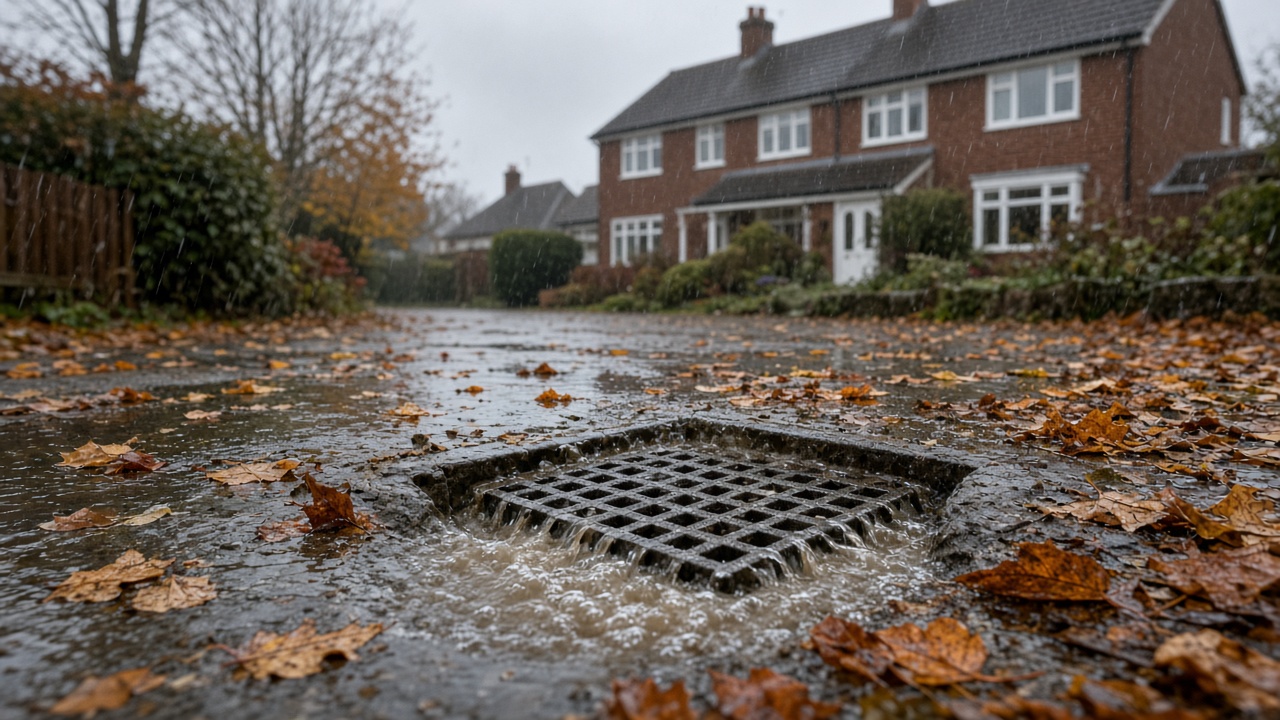
- Clear the gully at the bottom. Lift the grid and scoop out leaves and silt until you can see the water. If you have ACO-style channel drains across a drive or patio, lift the grates and clear the silt box at the outlet too.
- Do a water test. Pour a watering can of water into the gutter at the end furthest from the downpipe and watch where it goes. With the bans in place, don't use a hose from the mains. Thames Water's legal notice says water from a water butt is fine, even through a hosepipe.

How to Tell Where a Downpipe Blockage Is
The water test usually tells you where the blockage is:
- Water overflows the gutter but little comes out of the downpipe: the blockage is at the outlet, the swan neck or the top of the pipe.
- Water comes out of a joint partway down the pipe: the blockage is just below that joint, or the joint has come apart.
- Water runs out of the downpipe but the gully fills and overflows: the gully pot is full of silt or the pipe beyond it is blocked.
- The gully is clear and empty, but water rises in it as you pour: the blockage is in the underground drain. Rodding or jetting from the nearest inspection chamber is the next step. Our blocked downpipe page explains what we do in that case.
If you're not sure whether your rainwater goes to a soakaway or the public sewer, our guide does rainwater go into the sewer? explains how to find out.
What Our Engineers Commonly Find in Autumn
These are the patterns we see most often each November:
- A swan neck packed solid with leaves and moss from the roof. Rain then pours over the front of the gutter instead.
- A ball, a bird's nest or roof moss lodged at a bend in the downpipe.
- A gully full of silt that has been slowly draining for months.
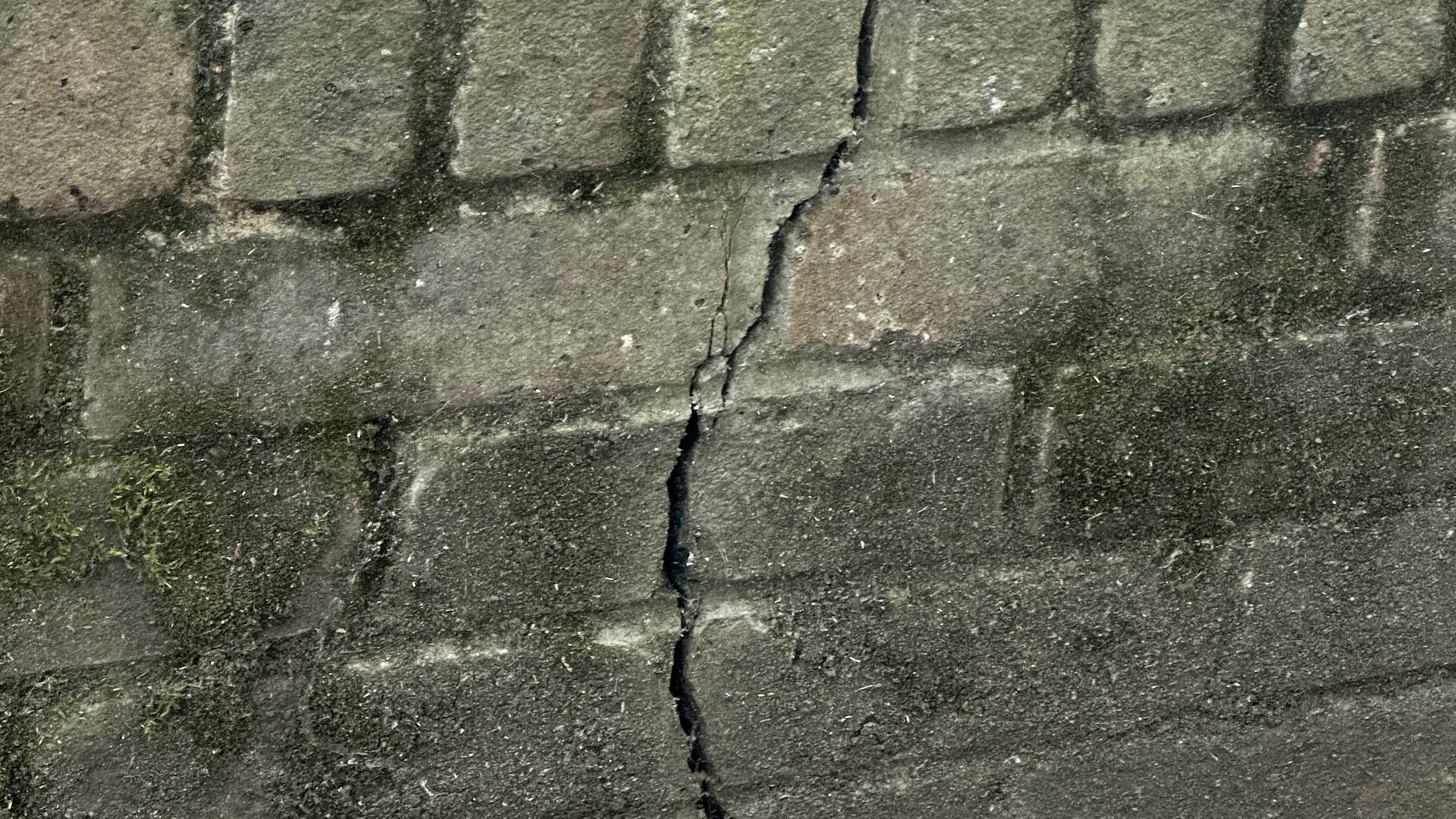
- A cast-iron downpipe cracked along the back where no one looks. It leaves a damp stripe on the wall.
- A downpipe that has dropped out of its gully or shoe, so roof water soaks into the ground next to the wall. On clay soil that matters. In our post on subsidence and drains we explain why water collecting by a foundation is the last thing you want after a dry summer. The SPAB also warns that blocked gullies can damage foundations.
If you collect rainwater, keeping the gutters clear helps there too. The RHS says a small shed roof in the dry south-east can collect 2,500 to 3,500 litres a year, and leaves rotting in the gutter make that water worse.

When to Call Someone, and Whose Gully Is It?
Gutters, downpipes and the gully on your own property are yours to look after. Gullies in the road are not. In Hertfordshire, report a blocked road gully to Hertfordshire County Council, and in London boroughs to the borough council. Repeated flooding can be the sewer rather than the gully. In West Watford, Cardiff Road flooded five times in a week in late October. The county council said its gullies had been cleaned and inspected, and Thames Water was investigating the sewer. If the road outside your house floods, don't lift manhole covers to let the water away. An open chamber under floodwater is easy to step into.
Call us if:
- the gully still won't drain after you've cleared it
- water comes back up through a gully or another drain when it rains
- a downpipe is cracked, has come away from the wall or is too high to reach safely
- you can smell drains, or the water test leaves a puddle that won't go down
Our drain unblocking service covers blocked underground runs. For more on storm-season problems, see blocked drains after heavy rain.
Common Questions
How Often Should I Clean My Gutters?
Which? suggests once or twice a year, with an extra check after windy or stormy weather. If your house is near big trees, plan for late autumn once most of the leaves are down, and again in spring.
Can I Use a Hosepipe or Pressure Washer to Clean Gutters During the Hosepipe Ban?
Not with mains water. The Thames Water and Affinity Water bans cover hosepipes and pressure washers used to clean outside surfaces, and Affinity says breaking its ban can lead to a fine of up to £1,000. Use a watering can or bucket, or water from a water butt.
How Do I Know If My Downpipe Is Blocked?
Look for water spilling over the front of the gutter in rain, water coming out of a joint partway down, a damp stripe on the wall, or a dull sound when you tap the lower part of the pipe. Pouring a watering can into the gutter will usually confirm it.
Are Gutter Guards Worth It?
They can reduce how often you clear gutters, but they aren't maintenance-free. The SPAB points out that guards and wire balloons can trap debris and still need checking.
Who Is Responsible for a Blocked Gully in the Road?
The highway authority, which is Hertfordshire County Council in Hertfordshire and the borough council in London. The gully on your own driveway or at the foot of your downpipe is your responsibility, up to where your pipe joins a shared drain.
Water Backing Up After You've Cleared the Gully?
If the gutters and gully are clear and the water still won't go away, the blockage is underground. Call us on 0208 387 5591. A real person answers 24 hours a day, and we'll agree a fixed price with you before we start