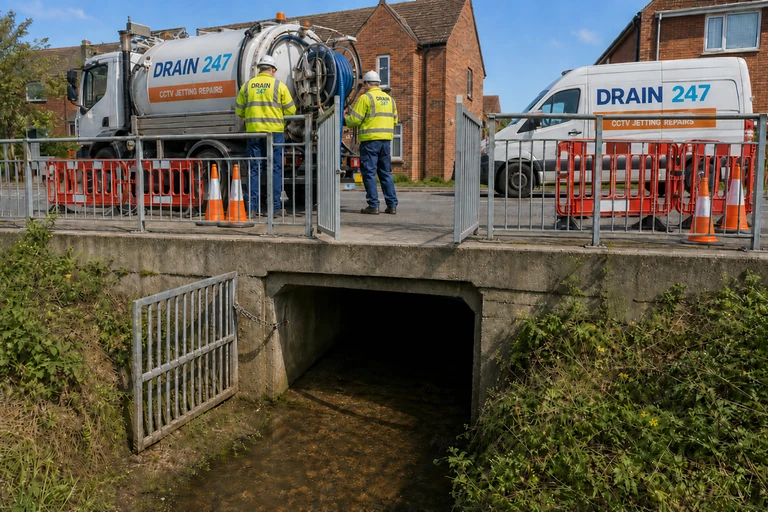
Drain tracing is how a drainage engineer works out exactly where your underground pipes run, how deep they are, which way they flow and where they join the public sewer. You usually need it before an extension, when a build-over agreement is required, when you are buying a house, or when nobody can find a manhole. If you need the finished drawing, start with our drain mapping service. This guide explains the locating work behind it.
When Do Homeowners Need Drains Traced?
-
Before an extension or conservatory. Your architect and building control need to know whether a drain or a public sewer runs under the footprint. See extension drain rules in Hertfordshire and build-over agreements.
-
Shared drains and disputes. Tracing shows whether a pipe serves only your house or is shared with neighbours, which affects who is responsible.
-
Lost or buried manholes. Chambers are often covered by patios, decking or extensions.
-
Misconnections. Checking that toilets and sinks go to the foul sewer, and rainwater to the surface water sewer or a soakaway.
-
Buying a property. Combined with a pre-purchase CCTV survey, it tells you what you are taking on.
Why It Matters Who Owns the Pipe
Responsibility usually changes at your boundary. Ofwat explains that since 1 October 2011, when private sewers were transferred to the water companies, your responsibility usually ends at the boundary of the property. Thames Water says it is responsible for sewers you share with neighbours, even if they are under your garden or driveway. Tracing shows which pipes are yours, which is exactly what you need to know before building over one.
How Drain Tracing Works
-
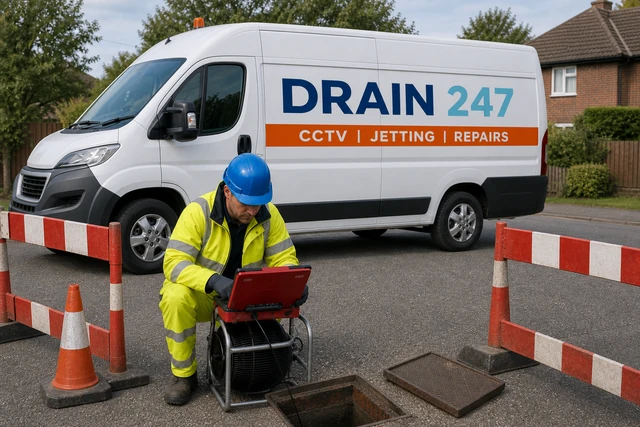
Lift and record the manholes. Each chamber is opened, measured and photographed, and the pipes entering and leaving it are noted.
-
CCTV camera. A camera is pushed along each pipe to see its route, connections and condition. Read more about our CCTV drain surveys.
-
Sonde and locator. A small transmitter (sonde) on the camera head sends a signal that a hand-held receiver picks up at the surface, giving the line and depth of the pipe. The engineer marks it on the ground.
-
Dye testing. Coloured, non-toxic dye is flushed down a sink, toilet or gully to see which chamber it appears in. This is the quickest way to confirm foul and surface water connections.
-
The drawing. Measurements are turned into a plan showing pipe runs, sizes, materials, depths, flow directions and chamber positions.
What You Get at the End
-
a scaled drainage plan of the property;
-
manhole details: positions, depths and connections;
-
pipe sizes, materials and flow directions, with foul and surface water marked;
-
CCTV footage and notes of any defects found along the way;
-
clear advice on anything that needs repairing.
Can I Trace My Drains Myself?
You can do a simple check. Lift your manhole covers, run a tap or flush a toilet, and watch which chamber the water flows through. You can also request the public sewer map from your water company (see how to find drainage plans for your house). Private drains are often not shown on any record, and depths and exact routes need proper equipment.
Frequently Asked Questions
How Long Does Drain Tracing Take?
A typical house takes a few hours on site. Larger or older properties with buried chambers take longer.
Is Drain Tracing the Same as a CCTV Survey?
Not quite. A CCTV survey looks at the condition of the pipe; tracing and mapping record where it goes. We often do both on the same visit. Our guide drain mapping vs drain surveying explains the difference.
Do I Need Drain Tracing for a Build-Over Agreement?
Usually you need to show where the public sewer runs and its condition. Your water company will tell you what it needs.
How Much Does It Cost?
It depends on the size of the property and how many chambers there are. We agree a price before we start. Call us for a quote.
Book Drain Tracing
Drain 247 traces and maps drains for homeowners across Watford, St Albans, Hemel Hempstead and North West London. Call 0208 387 5591 or send us a message.